
Tree Risk Assessment: Do You Really Need One on Your Property?
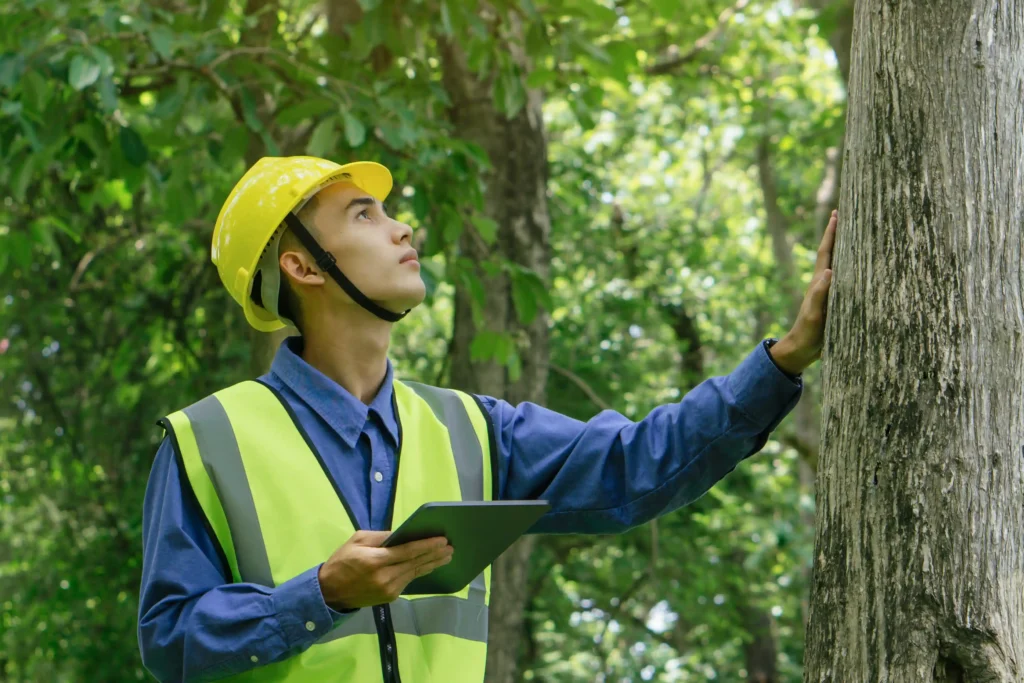
A tree risk assessment is not something every property needs right away, but it becomes important when a tree shows signs of damage, leans toward a structure, or sits near areas where people spend time.
Many homeowners notice something “off” about a tree and wonder if it is dangerous or just part of natural growth.
That uncertainty can feel stressful, especially when your home and safety are involved.
Research from the National Library of Medicine shows that while serious injuries from tree failures are rare, they are often linked to storms and structural issues.
We have worked with many property owners who faced this exact situation. Some trees only needed simple care, while others required closer attention. The key is knowing when to act and when to monitor.
In this guide, we walk you through what a tree risk assessment really means, when you need one, and how to make the right decision for your property.
What Is a Tree Risk Assessment and What Does It Actually Tell You?
A tree risk assessment is a professional evaluation of a tree’s condition and the potential risk it may pose to people or property. It is not just about whether a tree looks healthy. It is about understanding how likely it is to fail and what could happen if it does.
We look at four main things during an assessment:
- What part of the tree could fail
- How likely that failure is
- What the tree could hit if it fails
- How serious the damage could be
When we assess a tree, we are not just looking at how it looks. We follow a simple but proven approach. We ask three questions. What could fail? How likely is it to fail? What will it hit if it does?
This method is widely used in professional tree care and helps remove guesswork from the decision. In many cases, a risk evaluation also works alongside a broader tree health assessment, which helps us understand the overall condition of the tree and how it may change over time.
Do You Really Need a Tree Risk Assessment on Your Property?
This is the question most homeowners are really asking. The honest answer is that not every tree needs a formal assessment. However, certain situations make it much more important.
You should consider a tree risk assessment when:
- A tree is close to your home, driveway, or outdoor living space
- You notice visible damage like cracks, dead limbs, or decay
- A tree has changed suddenly after a storm
- Construction or digging has taken place near the roots
- You manage a property where safety and liability matter
On the other hand, trees that are young, healthy, and far from structures usually do not need immediate evaluation. Still, regular observation is always a good habit.
The goal is not to inspect every tree. It is to focus on the ones that could actually cause harm. In many cases, routine care such as pruning and shrub and bush trimming can help maintain plant structure and reduce potential risks before they become serious.
Why Is a Tree Risk Assessment Better Than a Quick Look?
It is easy to look at a tree and assume everything is fine, especially if it has leaves and appears stable. But many structural problems are not obvious from a quick glance.
We often see issues like internal decay, weak branch connections, or root instability that are not visible to homeowners. These hidden problems can increase the chance of failure, especially during storms or high winds.
A proper assessment gives you peace of mind. It helps you avoid emergency situations, unexpected damage, and costly repairs. More importantly, it allows you to take action before a small issue turns into a serious problem.
7 Signs You May Need a Tree Risk Assessment
Trees often give small warning signs before they become a bigger problem. The challenge is knowing what those signs mean and when to take them seriously.
We have seen many situations where early attention could have prevented damage. Here are seven signs that may mean it is time for a closer look.
Large Dead or Hanging Branches
Dead limbs can fall without warning, especially during wind or rain.
Sudden Lean or Shifting Soil
A tree that starts leaning or lifting the soil around it may have root problems.
Mushrooms or Fungal Growth
Fungi around the base often signal decay within the roots or trunk.
Hollow Areas or Cavities
Open spaces in the trunk reduce the tree’s strength and stability.
Root Damage from Construction
Digging, paving, or heavy equipment can weaken the root system.
Storm Damage or Repeated Branch Loss
Trees that lose limbs frequently may have deeper structural issues.
These signs do not always mean removal is needed, but they are strong indicators that a closer look is worth it.
A professional tree risk assessment follows a clear step-by-step process. It is not based on guesswork. Each step helps us understand how safe the tree is and what actions, if any, are needed.
What Happens During a Professional Tree Risk Assessment?
A professional tree risk assessment follows a clear step-by-step process. It is not based on guesswork. Each step helps us understand how safe the tree is and what actions, if any, are needed.
Step 1: Looking at What the Tree Could Hit
We start by identifying nearby targets. This includes your home, vehicles, walkways, patios, and areas where people spend time.
A tree in an open yard carries less risk than one hanging over a roof or driveway. The surroundings always matter.
We start by identifying nearby targets. This includes your home, vehicles, walkways, patios, and areas where people spend time.
A tree in an open yard carries less risk than one hanging over a roof or driveway. The surroundings always matter.
Step 3: Inspecting the Tree from Roots to Canopy
We carefully inspect the entire tree, starting from the roots up to the canopy.
We check for root damage, decay, cracks in the trunk, weak branch connections, and signs of disease or stress. Some issues are easy to see, while others require a trained eye to spot early warning signs.
Step 4: Determining Risk Level and Next Steps
After gathering all the details, we determine the level of risk based on the tree’s condition, its surroundings, and what it could impact.
We usually group risk into simple levels such as low, moderate, high, or extreme. These levels help guide what should happen next.
- A low-risk tree may only need routine care and occasional monitoring
- A moderate-risk tree may benefit from pruning or minor improvements
- A high-risk tree means action should be taken soon to reduce the chance of failure
- An extreme-risk tree often requires immediate attention to prevent serious damage
Based on this, we recommend practical solutions. This may include pruning, adding support systems like cabling, ongoing monitoring, or removal when the risk cannot be managed safely.
Step 5: Providing Clear Guidance
We explain everything in simple terms so you understand your options.
The goal is to help you make a confident decision, not to pressure you into unnecessary work.
Not All Tree Assessments Are the Same
According to the International Society of Arboriculture, tree risk assessments are done at different levels.
A basic visual check is used for quick screening. A more detailed assessment looks closely at the tree and site conditions. In some cases, advanced tools are used to detect internal decay.
This means not every tree needs a deep inspection. The level of assessment depends on the condition of the tree and how much risk is present.
What Low, Moderate, High, and Extreme Tree Risk Really Mean?
Risk levels help prioritize action, but they are often misunderstood.
- Low risk means the tree is stable and only needs routine care
- Moderate risk suggests monitoring or minor improvements
- High risk indicates a higher chance of failure that should be addressed soon
- Extreme risk means immediate action is needed to prevent damage
These categories are not about labeling a tree as good or bad. They help guide decisions based on safety and timing.
Does Every Risky Tree Need Removal?
Not at all. This is one of the biggest misconceptions we see.
Many trees can be improved with proper pruning, support systems, or better soil conditions. In some cases, simply reducing weight on certain branches can lower the risk significantly.
The Arbor Day Foundation explains that many trees are removed unnecessarily due to fear rather than proper evaluation. In reality, many risks can be managed without removing the tree.
Our goal is always to preserve healthy trees whenever possible. Removal is only recommended when the risk cannot be managed in a safe and practical way.
When You Should Schedule a Tree Risk Assessment Right Away?
Some situations call for immediate attention.
- After strong storms or heavy winds
- When a tree is leaning toward your home
- Before starting construction near tree roots
- When a tree shows sudden or unusual changes
- If you are buying or selling a property with large trees
Taking action early helps prevent bigger problems later.
Can a Tree Risk Assessment Predict Failure 100 Percent?
A tree risk assessment helps reduce uncertainty, but it cannot predict failure with complete accuracy.
A study published in PLOS ONE found that no current method can fully predict when a tree will fail. Trees are living structures, and many factors change over time.
What an assessment does is identify warning signs early and help reduce the chances of unexpected failure. It gives you a clear plan instead of guesswork.
Tree Risk Assessment for Homeowners vs. Commercial Properties
Tree risk assessment matters for both homeowners and commercial properties, but the reasons and priorities are different.
Tree Risk Assessment for Homeowners
For homeowners, the focus is usually on protecting what matters most day to day. This includes your house, your family, vehicles, and outdoor spaces like patios, decks, and walkways.
A falling branch or unstable tree can damage a roof, block access, or create a safety hazard. Many homeowners are also thinking about maintaining the look and value of their property, not just removing trees.
In most cases, the goal is simple. Keep the landscape safe while preserving healthy trees whenever possible.
Tree Risk Assessment for Commercial Properties
Commercial properties have a wider level of responsibility. Safety is not just personal, it involves employees, customers, tenants, and visitors.
Trees near parking lots, sidewalks, entrances, and public areas need closer attention because they are in high-use spaces. Property owners and managers also need to consider liability. A tree failure in these areas can lead to injuries, property damage, and legal concerns.
Regular inspections, clear documentation, and ongoing maintenance plans are often needed to manage these risks properly.
Key Differences in Approach and Responsibility
The biggest difference comes down to scale and responsibility. Residential properties usually involve a smaller number of trees and simpler decisions. Commercial properties often require routine monitoring across larger areas with more people involved.
Even with these differences, the goal remains the same for both. Reduce risk, protect people, and maintain healthy, well-managed trees over time.
Making the Right Call for Your Property
Understanding whether you need a tree risk assessment comes down to awareness and timing. Not every tree needs immediate attention, but the right evaluation at the right time can prevent serious problems.
At Gebhard Horticulture, we take a careful and practical approach to tree care. We focus on real conditions, not assumptions, so property owners can make confident decisions.
Our experience allows us to assess trees with care, honesty, and attention to detail. Whether a tree needs simple maintenance or closer monitoring, our goal is to guide you toward the safest and most balanced solution for your property.
If you are unsure about a tree on your property, you can always schedule a consultation to get clear and honest guidance.
Frequently Asked Questions
Is a leaning tree always dangerous?
Not always. Some trees naturally lean, but sudden changes are a concern.
Can a healthy looking tree still fail?
Yes. Internal issues are not always visible from the outside.
How often should trees be assessed?
It depends on the tree’s condition and location. High-risk areas may need more frequent checks.
Can pruning reduce tree risk?
Yes. Proper pruning can improve structure and reduce stress on branches.
Do I need a written report?
In some cases, especially for property management or insurance, documentation can be helpful.
References:
Owen’s Tree Care – https://owenstreecare.com/tree-risk-assessment-honest-answers-for-your-propertys-safety/
Sargents Gardens – https://sargentsgardens.com/why-a-tree-assessment-is-critical-for-homeowners/
PLOS ONE – https://journals.plos.org/plosone/article?id=10.1371/journal.pone.0246805
National Library of Medicine – https://pmc.ncbi.nlm.nih.gov/articles/PMC12325530/