
Low-Maintenance Front Yard Landscaping for Busy Homeowners

A beautiful front yard does not require constant mowing or weeding. Low maintenance front yard landscaping uses hardy plants, mulch, groundcovers, and simple layouts to reduce upkeep while keeping strong curb appeal.
Busy homeowners can create an attractive yard by choosing native or slow-growing plants, eliminating bare soil with mulch or stone, and grouping plants to naturally suppress weeds.
With smarter design and fewer high-maintenance features, it becomes possible to enjoy a clean, welcoming front yard without spending every weekend on yard work.
Low Maintenance Front Yard Landscaping Starts With Smart Planning
Many homeowners believe maintenance problems come from weeds or fast growing plants. In reality, most issues begin with layout decisions made early on.
A thoughtful approach, often supported by a professional garden design and planting service, helps create a front yard that stays attractive without constant upkeep.
We always focus on three foundational elements.
Choose the right yard style
A yard should match how much time you realistically want to spend outdoors. Some homeowners enjoy seasonal gardening while others prefer a set-it-and-forget-it approach. When time is limited, simple designs with fewer plant varieties work best.
Use larger planting groups
Grouping plants creates a fuller look while reducing gaps where weeds grow. Larger clusters also simplify watering, pruning, and seasonal cleanup.
Eliminate bare soil
Bare soil invites weeds and moisture loss. Groundcovers, mulch, and decorative stone keep beds cleaner and require less ongoing attention. Regular mulching and weeding also helps maintain neat garden beds and prevents unwanted growth.
Easy Upgrades That Reduce Maintenance Immediately
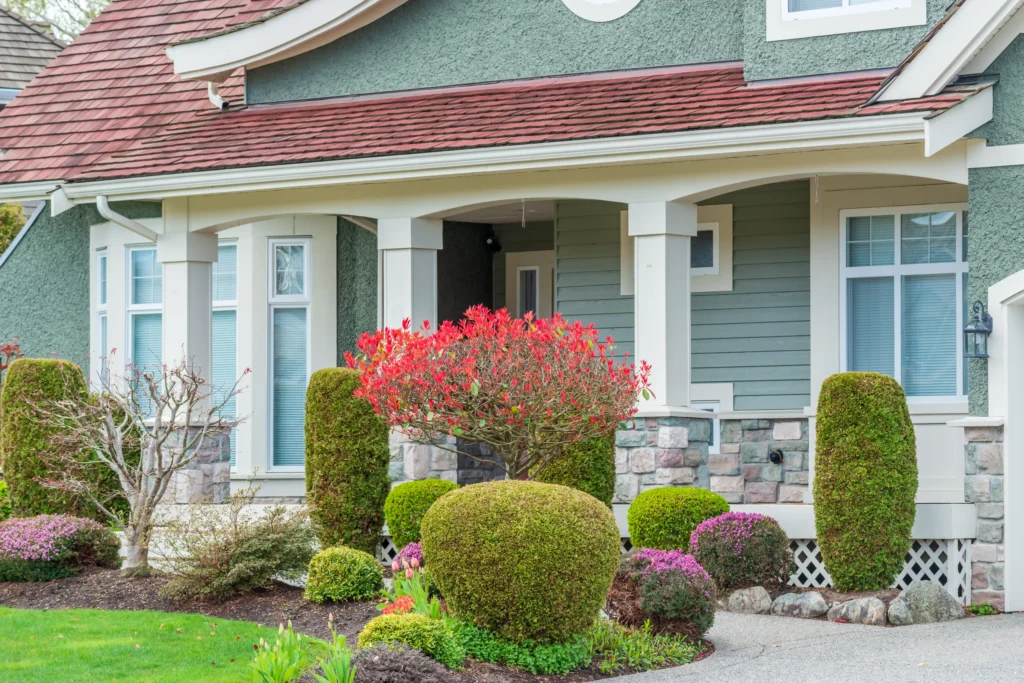
Small changes can dramatically lower yard work while improving appearance.
Add a focal tree for structure
A single ornamental tree creates visual interest without constant trimming. Japanese maples, flowering trees, and compact evergreens provide year round appeal with minimal upkeep.
Use creeping plants on slopes and walls
Groundcover plants stabilize soil and prevent erosion. They also eliminate mowing in difficult areas.
Install vertical features
Trellises and arbors create height without expanding planting beds. Climbing plants add beauty while keeping maintenance concentrated in one spot.
Create smaller but fuller flower beds
Large beds often become overwhelming. Smaller beds filled with hardy perennials look complete and are easier to manage.
Incorporate evergreen shrubs
Evergreens maintain structure throughout the year and reduce seasonal replanting. They also provide natural framing for entryways.
Use hydrangeas for bold impact
Hydrangeas offer large blooms with simple pruning routines. Many varieties thrive in partial shade and require minimal attention once established.
Choose shade-friendly plants
Hostas and heuchera perform well in shaded front yards and spread naturally, reducing replanting.
Combine shrubs with groundcovers
Layered planting helps suppress weeds while creating depth. Groundcovers function like living mulch.
Consider low-mow lawn alternatives
Clover or mixed lawns can reduce mowing frequency and improve drought tolerance.
Apply mulch strategically
Mulch helps retain moisture, suppress weeds, and create a finished look. A fresh layer once or twice per year often replaces constant weeding. Applying mulch in fall is especially helpful because it protects roots, improves soil health, and prepares beds for seasonal changes.
Plant native trees
Native trees adapt well to local climate conditions and typically require less watering and care.
Add decorative rock features
Rock beds and edging provide clean lines while minimizing plant maintenance.
Front Yard Templates That Simplify Decision Making
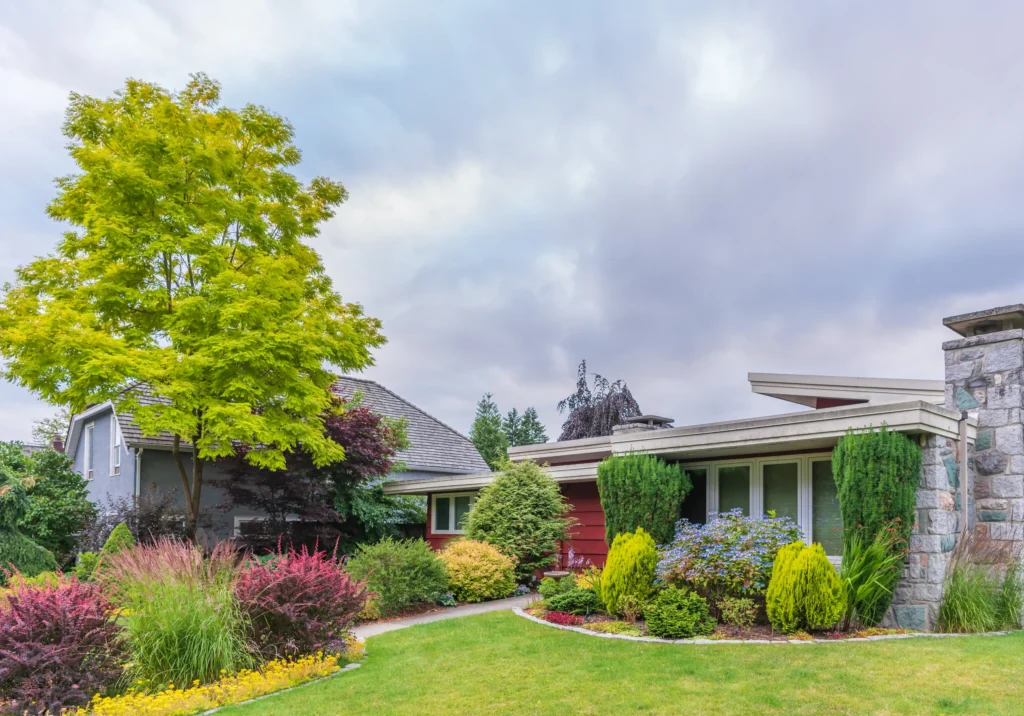
Simple layout templates help busy homeowners avoid design overwhelm and reduce long-term maintenance. Here are practical front yard ideas that are easy to manage:
- Small Front Yard Layout: Use one focal tree, compact shrubs, and mulched beds to create structure without clutter. This reduces mowing and keeps upkeep minimal.
- Shade-Heavy Yard Layout: Choose shade-tolerant plants like hostas and heuchera, paired with mulch and simple pathways, to create a clean and low-maintenance woodland feel.
- Sloped Or Corner Lot Layout: Combine groundcovers, decorative rock, and layered shrubs to stabilize soil, prevent erosion, and minimize mowing or trimming.
- Entry-Focused Layout: Frame walkways and entrances with evergreen shrubs and seasonal planters to maintain curb appeal with limited maintenance.
Low-Mow Lawn Alternative Layout: Replace high-maintenance turf areas with clover lawns, stone beds, or groundcovers to reduce watering, fertilizing, and mowing needs.
Morris County Landscaping Considerations For Low Maintenance Success
Local conditions play a major role in how landscapes perform.
Freeze and thaw cycles
Temperature fluctuations can stress plants and soil. Choosing hardy species and maintaining proper drainage reduces long term issues.
Mature tree shade
Many neighborhoods feature established trees that create shade. Selecting shade tolerant plants prevents repeated replacements.
Deer browsing pressure
Deer resistant plant choices reduce damage and replanting.
Salt exposure near driveways
Salt can impact soil health and plant growth. Hardy plants and strategic edging protect landscaping along walkways and streets.
Watering smarter
Outdoor watering accounts for a significant portion of household water use. Native plants and mulching help reduce irrigation needs while keeping beds healthy.
A Simple Maintenance Schedule For Busy Homeowners
Low maintenance does not mean zero maintenance. It means predictable and manageable routines.
Weekly tasks
A quick walk through the yard to remove debris, check plants, and spot weeds early often takes less than 20 minutes.
Monthly tasks
Light pruning, edging touch ups, and watering adjustments help maintain structure.
Seasonal tasks
Spring and fall cleanup, mulch refresh, and selective pruning keep the yard looking polished throughout the year. Following seasonal fall lawn care tips such as aeration, leaf cleanup, and soil preparation also supports healthier landscaping with less work later.
Common Mistakes That Create High Maintenance Yards
Understanding what to avoid is just as important as knowing what to plant.
- Planting too many varieties creates inconsistent growth patterns
- Leaving bare soil encourages weeds
- Overwatering leads to faster weed growth and plant stress
- Ignoring edging allows grass to invade planting beds
- Choosing high maintenance annuals increases seasonal workload
When Professional Guidance Makes Landscaping Easier?
Some landscaping projects seem simple at first but can become time consuming when plants struggle, weeds return, or layouts feel unbalanced. Professional guidance helps homeowners avoid trial and error by creating a clear plan that supports long-term growth and lower maintenance.
Landscaping experts understand plant spacing, soil conditions, drainage, and sunlight patterns. These factors influence how well a yard performs over time. With the right approach, homeowners can reduce watering needs, limit weed growth, and prevent overcrowded planting beds.
Professional help is especially useful when updating older landscapes that no longer match a homeowner’s lifestyle. A garden bed redesign can improve plant health, refresh curb appeal, and replace high-maintenance plants with easier alternatives. It also helps create better structure so beds stay neat with minimal upkeep.
Working with experienced landscapers allows homeowners to invest in smart solutions from the start. Those considering improvements can inquire with us to explore practical landscaping strategies that support a beautiful front yard without constant effort.
A Front Yard That Supports Your Lifestyle
Low maintenance landscaping is not about removing beauty from your yard. It is about designing a space that supports your lifestyle instead of competing with it. With thoughtful plant choices, simple layouts, and smart maintenance strategies, homeowners can enjoy strong curb appeal without constant effort.
At Gebhard Horticulture, years of hands-on experience in Morris County have shown that successful landscapes are built around real homeowner routines.
Our approach focuses on practical design, durable plant selections, and long term care strategies that help front yards stay attractive with minimal upkeep. Thoughtful planning can transform any front yard into a welcoming and manageable space.
Frequently Asked Questions
Evergreens, native shrubs, ornamental grasses, and groundcovers tend to require less watering and pruning once established.
What plants require the least maintenance in a front yard?
Evergreens, native shrubs, ornamental grasses, and groundcovers tend to require less watering and pruning once established.
How do I stop weeds without constant pulling?
Mulch, groundcovers, and proper plant spacing create natural weed suppression.
What is the fastest way to improve curb appeal?
Fresh mulch, clean edging, and one focal plant often deliver immediate visual improvement.
Are native plants truly lower maintenance?
Native plants adapt to local soil and climate conditions, reducing watering and fertilization needs.
How much time should low maintenance landscaping require?
Most homeowners can maintain a well designed yard with 30 to 60 minutes of weekly care plus seasonal tasks.